
WAFCON 2026
WAFCON 2026 Group D Preview: Black Queens set for Cape Verde, Cameroon and Mali tests in Fès


Ghana’s Black Queens will begin their quest for continental success and FIFA Women’s World Cup qualification when they compete in Group D of the 2026 Women’s Africa Cup of Nations (WAFCON) in Morocco. The tournament runs from March 17 to April 3, 2026, with all of Ghana’s group-stage matches scheduled to be played at the Fès Sports Complex.
Ghana’s Group Stage Fixtures
Ghana vs Cape Verde – Wednesday, March 18, 2026
Ghana vs Cameroon – Saturday, March 21, 2026
Mali vs Ghana – Tuesday, March 24, 2026
Ghana enter the tournament as one of the competition’s most decorated teams, having finished runners-up three times (1998, 2002, 2006) and claimed four bronze medals(2000, 2004, 2016), most recently in 2024 where they beat South Africa on penalties.
The Black Queens secured qualification with an emphatic 7–0 aggregate victory over Egypt and are led by Swedish head coach Kim Lars Björkegren, who was appointed in late 2024 to usher the team into a new era.
On the global stage, Ghana have previously qualified for the FIFA Women’s World Cup three consecutive times (1999, 2003, 2007) and will be aiming to return after nearly two decades away.
Group D Preview: Match-by-Match Outlook
Ghana vs Cape Verde – Opening Test Against Newcomers
Ghana open their WAFCON 2026 campaign against tournament debutants Cape Verde, a side making its first-ever appearance at the Women’s Africa Cup of Nations.
Cape Verde booked their historic qualification by defeating Mali 4–3 on aggregate in the second round of qualifiers, after edging Guinea 6–3 on aggregate in the first round.
While Cape Verde lack tournament experience, their rapid rise since forming a national women’s team in 2018 and their fearless qualification run make them an unpredictable opening opponent. For Ghana, securing a positive start will be key to setting the tone for the group.
Under head coach Silvéria Nédio, the newcomers will rely on organization and belief, but Ghana’s pedigree and tournament know-how make them clear favourites in the opener.
Ghana vs Cameroon – A Familiar Rivalry
The Group D encounter between Ghana and Cameroon pits two of Africa’s most established women’s football nations against each other.
Cameroon are four-time WAFCON runners-up (1991, 2004, 2014, 2016), including a heartbreaking 1–0 defeat to Nigeria in the 2016 final on home soil in Yaoundé. They have also featured in the 2015 and 2019 FIFA Women’s World Cups, exiting both tournaments at the Round of 16 stage. Despite failing to qualify on the pitch, the Indomitable Lionesses were granted a place at WAFCON 2026 as one of the best-ranked eliminated teams, following their 3–1 aggregate loss to Algeria in the qualifiers.
That pedigree was clearly on display at the 2018 WAFCON, hosted by Ghana, where Cameroon went on to finish third, reinforcing their reputation as perennial contenders on the continental stage. The tournament, however, proved a painful chapter for the hosts. Ghana and Cameroon were paired in Group A, and their 1–1 draw in the final group match ultimately denied the Black Queens a place in the semi-finals, with only eight teams participating and just four progressing at the time.
Recent history, however, offers encouragement for the Black Queens, having defeated Cameroon 2–0 at the 2021 Aisha Buhari Cup. Coached by Alain Djeumfa, who returned to the role in late 2025, Cameroon remain a physically imposing and tactically experienced side, making this fixture a likely battle for group supremacy.
Mali vs Ghana – A Decisive Group Finale
Ghana’s final group match comes against Mali, a team that has steadily grown into a consistent WAFCON contender.
The two sides played out a 1–1 draw at the 2024 WAFCON, while Mali famously defeated Ghana 2–1 in their second group game at the 2018 tournament. That 2018 edition marked Mali’s breakthrough, as they reached the semi-finals for the first time, finishing fourth overall on home soil in Ghana.
Mali qualified for WAFCON 2026 after a dominant 10–1 aggregate win over Gabon, before losing 4–3 on aggregate to Cape Verde in the second round and advancing as one of the best-ranked eliminated teams. Led by coach Mohamed Saloum “Housseï”, the Eagle Ladies blend local talent with foreign-based players and remain one of the most disciplined sides in the group.
With qualification potentially hanging in the balance, this encounter is expected to be tense, tactical and decisive.
Competition Format
The 2026 WAFCON features 16 teams divided into four groups of four (Groups A–D).
At the end of the group stage, the top two teams in each group advance to the knockout phase, comprising the Quarter-finals, Semi-finals, Third-Place Play-Off and Final.
Crucially, all four semifinalists will qualify directly for the 2027 FIFA Women’s World Cup in Brazil, while additional qualification play-offs will also be staged as part of the tournament’s concluding fixtures.
With history, redemption, and World Cup dreams all on the line, the Black Queens will be eager to navigate a challenging Group D and reassert their place among Africa’s elite.


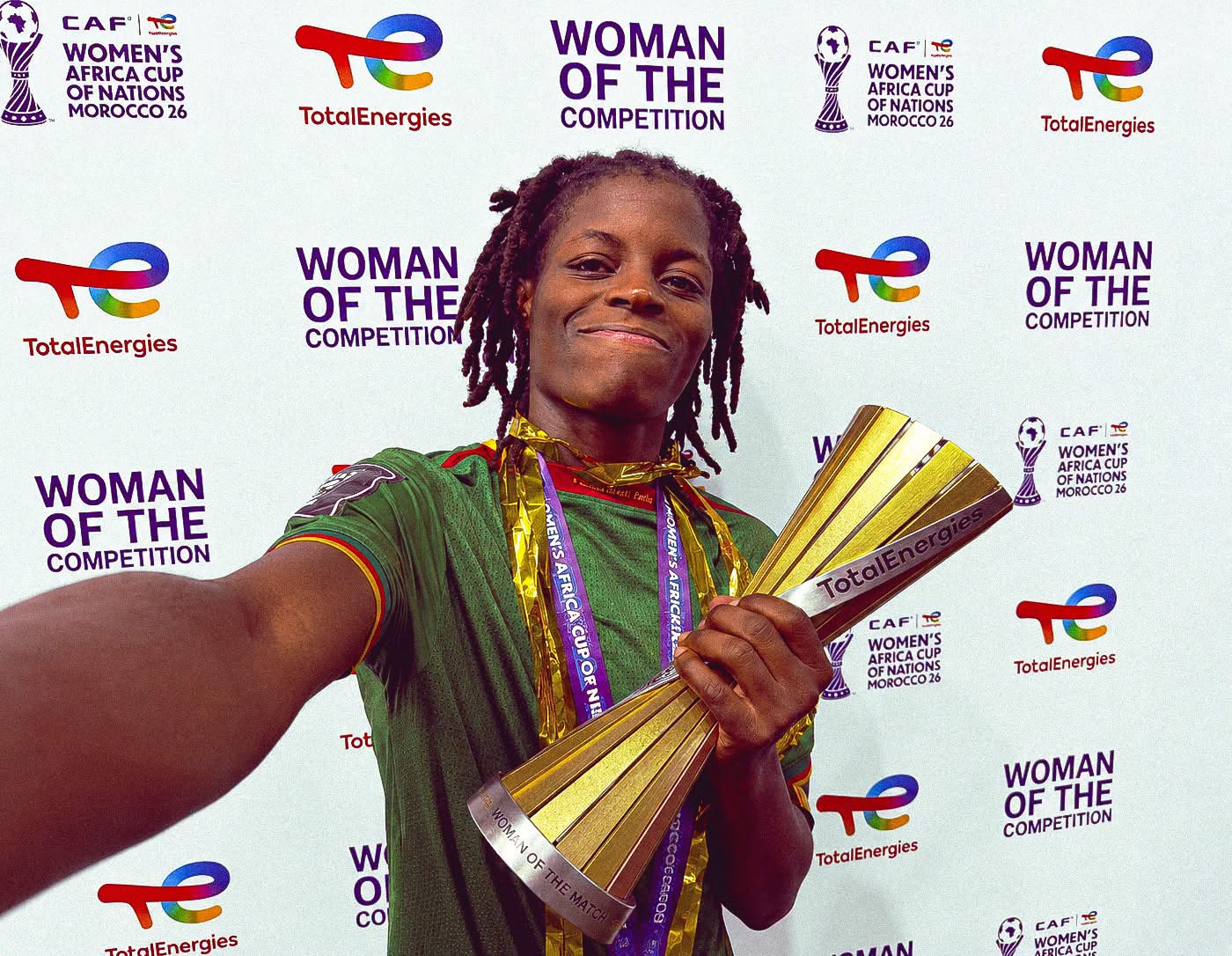
The curtains have officially fallen on the 2026 Women’s Africa Cup of Nations (WAFCON), with the outstanding performers of the tournament recognised after a historic competition in Morocco.
Newly crowned champions Cameroon dominated the individual awards, with several players earning recognition for their impressive contributions, while Malawi’s Temwa Chawinga claimed the prestigious Golden Boot award.
Cameroon midfielder Monique Ngock was named the TotalEnergies Woman of the Competition after an outstanding tournament that saw her play a key role in the Indomitable Lionesses’ historic title-winning campaign.
Ngock’s performances throughout the competition helped Cameroon secure their first-ever WAFCON trophy after defeating debutants Malawi in the final.
Malawi forward Temwa Chawinga finished as the tournament’s top scorer, winning the PUMA Golden Boot after scoring five goals and providing two assists.
Chawinga edged Cameroon’s Marie Gisèle Ngah Manga, who also finished the tournament with five goals, including a brace in the final that helped Cameroon lift the continental title.
Cameroon goalkeeper Michaely Bihina was rewarded for her outstanding displays between the posts, winning the Best Goalkeeper award after playing a crucial role in the champions’ successful campaign.
The Fair Play Award went to Algeria for their discipline and sportsmanship throughout the tournament.
The 2026 WAFCON ended with Cameroon lifting their first African women’s football title, Malawi finishing as historic runners-up in their debut appearance, and both teams securing qualification to the 2027 FIFA Women’s World Cup in Brazil alongside the other top-performing African nations.


WAFCON 2026
WAFCON 2026: Cameroon crowned African Champions after defeating Malawi in historic final
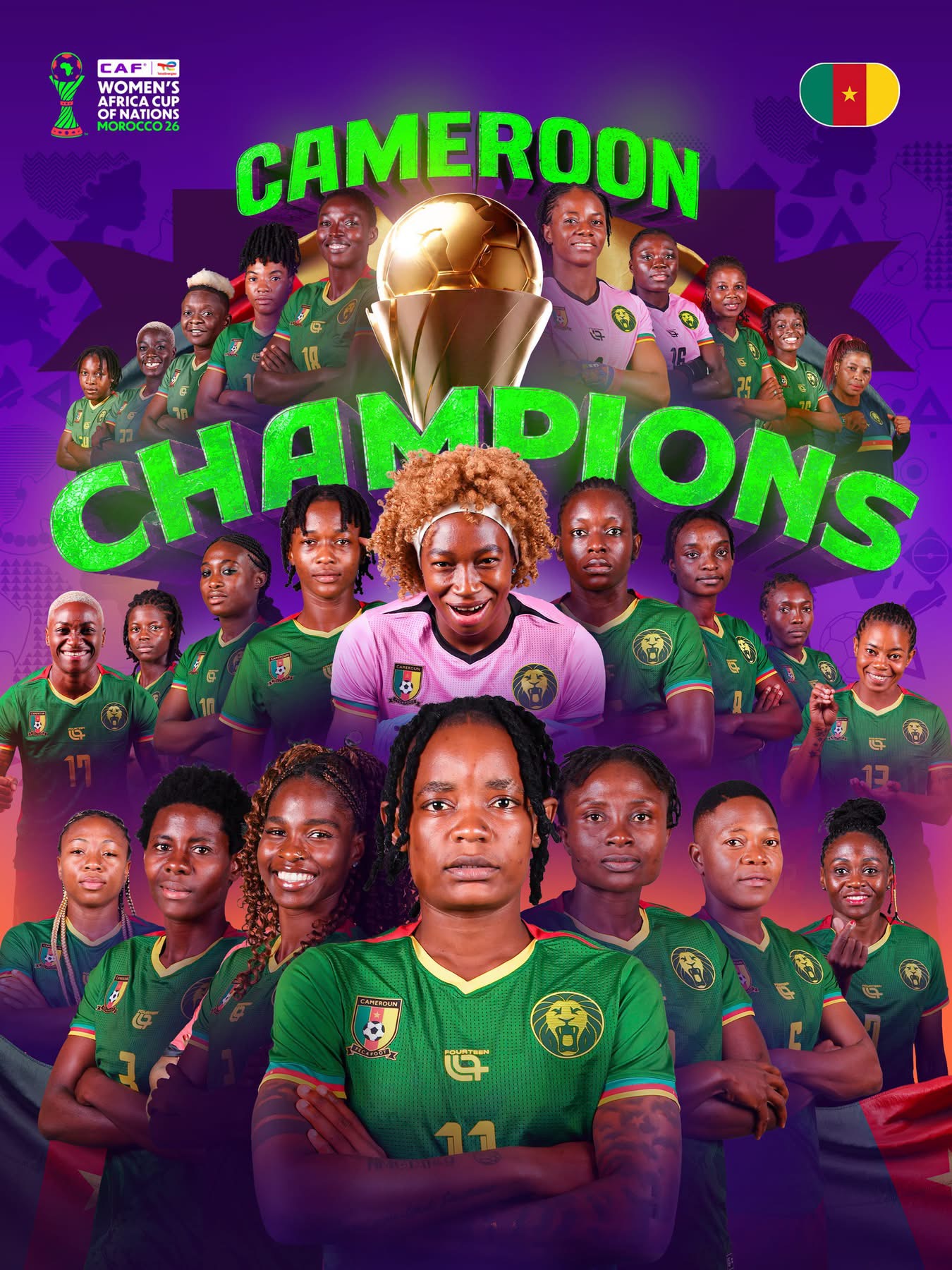
Cameroon have been crowned champions of Africa for the first time after defeating tournament debutants Malawi in the final of the 2026 Women’s Africa Cup of Nations (WAFCON).
The Indomitable Lionesses produced a dominant first-half display, scoring three goals before the break to take control of the final.
Marie Gisèle Ngah Manga was the star of the occasion, scoring twice, while Eto added another goal as Cameroon built a commanding advantage.
Malawi, who were appearing in their first-ever WAFCON tournament, could not complete another fairytale comeback as Cameroon held on to secure their maiden continental title.
The victory marks Cameroon’s first WAFCON triumph after four previous final appearances. The Indomitable Lionesses had reached the final on three occasions before (2004, 2014 and 2016) but missed out on the trophy each time.
Ngah Manga capped off an outstanding tournament with a brace in the final, taking her tally to five goals and earning the Woman of the Match award.
For Malawi, the journey has been nothing short of historic. The debutants shocked the continent by reaching the final after eliminating Ghana in the quarterfinals and Algeria in the semifinals.
They also announced their arrival on the big stage by defeating 10-time champions Nigeria 3-2 in their opening group-stage match.
Despite falling short in the final, Malawi’s remarkable campaign has earned them a place among Africa’s elite and secured qualification for the 2027 FIFA Women’s World Cup in Brazil.
Cameroon and Malawi will both represent Africa at the global tournament, having finished among the top four teams at WAFCON 2026, which also served as the continent’s qualification pathway for the World Cup.
The 2026 WAFCON final will be remembered as the night Cameroon finally lifted the African women’s football crown after years of waiting, while Malawi completed one of the greatest debut campaigns in the history of the competition.
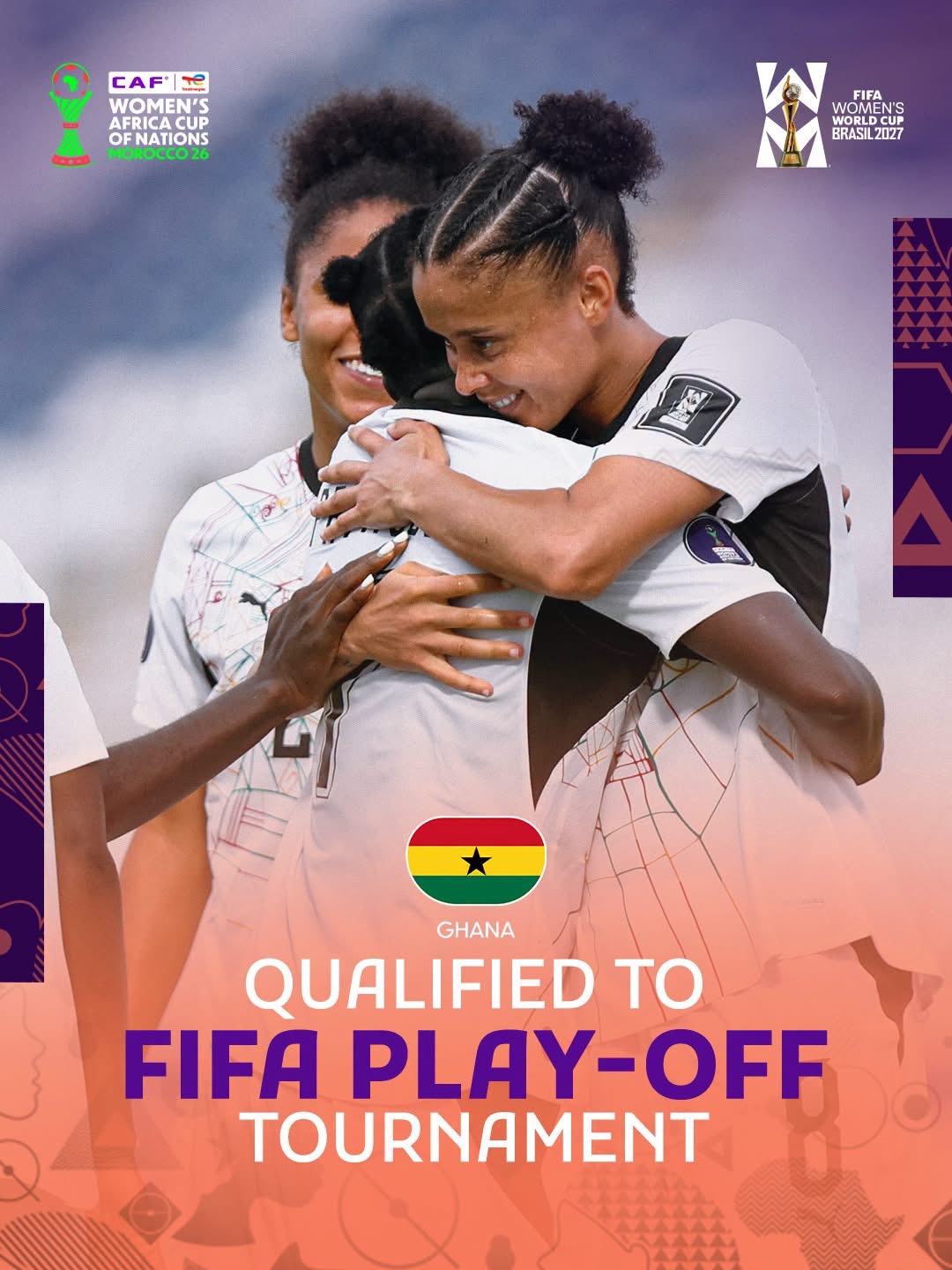
Ghana’s Black Queens have kept their hopes of qualifying for the 2027 FIFA Women’s World Cup in Brazil alive after fighting back to defeat Côte d’Ivoire 2-1 in the Women’s Africa Cup of Nations (WAFCON) 2026 play-in match.
The victory means Ghana have advanced to the FIFA Women’s World Cup Play-Off Tournament, where they will continue their quest for a place at the global showpiece.
The Black Queens had a difficult start to the encounter as Côte d’Ivoire took the lead in the second minute after Princess Marfo was adjudged to have committed a foul inside the penalty area. The Ivorians converted the resulting spot kick to put Ghana under early pressure.
Early in the second half, Stella Nyamekye thought she had restored parity for Ghana, but her effort was ruled out, denying the Black Queens a quick comeback.
However, Ghana continued pushing and were eventually rewarded in the 58th minute when Princess Marfo rose highest to head home the equaliser and bring the Black Queens level.
The momentum shifted in Ghana’s favour, and the team completed the comeback in the 72nd minute through Josephine Bonsu, who calmly converted from the penalty spot after a handball offence by Côte d’Ivoire. The penalty was won by Grace Asantewaa, whose effort helped create the decisive moment that gave Ghana the lead.
Princess Marfo was rewarded for her outstanding performance with the Woman of the Match award after scoring Ghana’s equaliser and playing a key role in the team’s attacking efforts.
Following their quarterfinal exit to Malawi, Ghana entered the play-in route alongside the other WAFCON quarterfinal losers. The winners of the African play-in matches advance to the FIFA Women’s World Cup Play-Off Tournament, where they will compete for one of the remaining World Cup slots through the inter-confederation qualification process.
The Black Queens now move one step closer to returning to the FIFA Women’s World Cup for the first time since 2007, but they must navigate the global play-off stage to complete their qualification journey.
-

 FIFA U17 Women's World Cup20 hours ago
Nigeria make history as first African Nation to win FIFA U-17 Women’s World Cup
-
 FIFA U17 Women's World Cup19 hours ago
Belinda Maku Aklie marks return to Cabfix Ladies with clean sheet after World Cup assignment
-

 FIFA U17 Women's World Cup7 days ago
FIFA U-17 Women’s World Cup: Ghana exit after 1-0 quarter-final defeat to Japan as defenders impress
-

 FIFA U17 Women's World Cup4 days ago
FIFA U-17 Women’s World Cup: Nigeria make history as first African finalists
-
 FIFA U17 Women's World Cup5 days ago
Nigeria fly African flag as 2026 FIFA U-17 Women’s World Cup reaches semi-final stage